The prettiest girl in the class
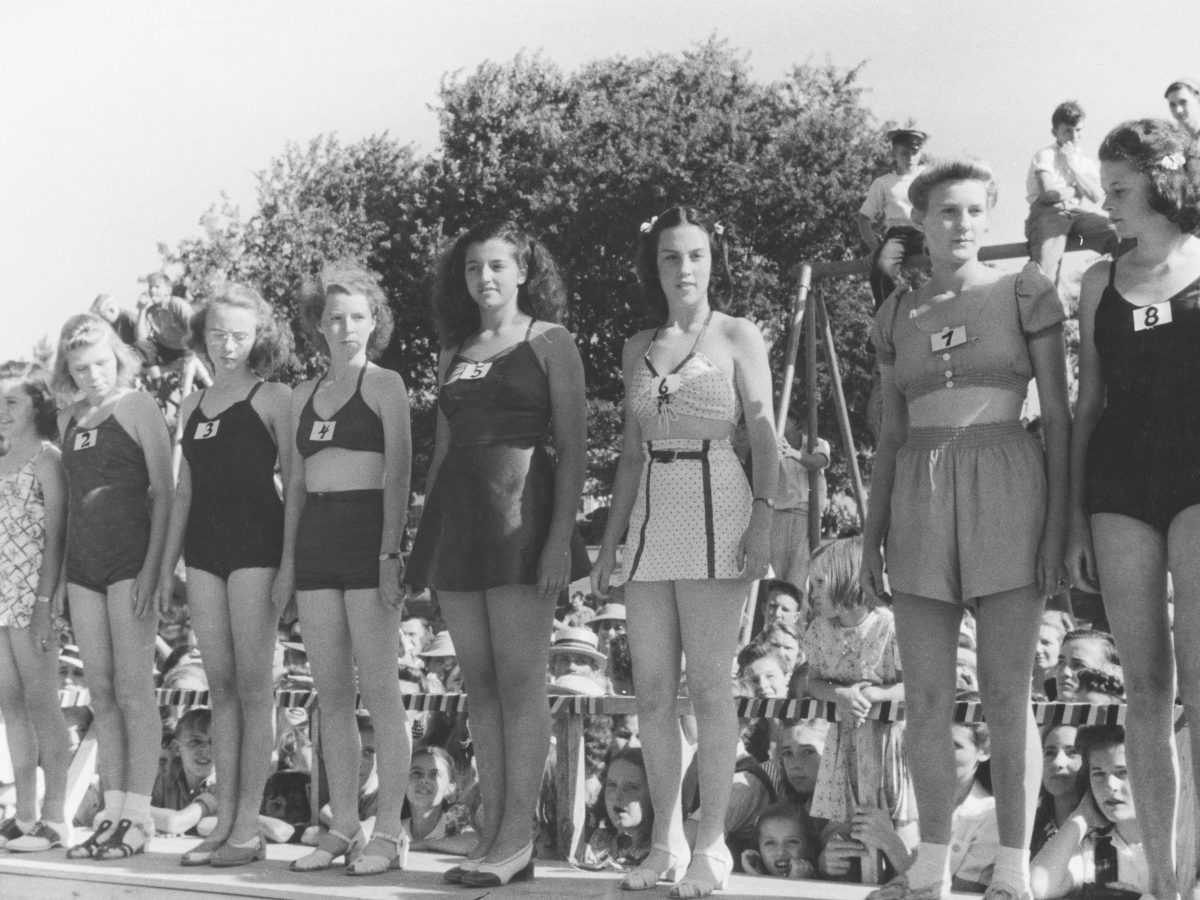
In the Netherlands, a popular TV programme called ‘Het mooiste meisje van de klas’ ran for nearly 20 years. Each episode centred on a woman who went to school between 1970 and 1990 and was considered ‘the prettiest girl in the class’. Old classmates were reunited to discuss just what was so special about that girl, while she was interviewed about her life, then and now.
In my final year of primary school, when boys and girls finally stopped loathing each other and starting pursuing each other instead, we didn’t have a prettiest girl or a most handsome boy. There was a popular group, who were generally the ones who were most in demand – or at least those whom we were willing to confess to being attracted to. We did, however have an ugliest girl and an ugliest boy. If you wanted to hurt someone, all you had to do was to spread it around that they fancied either of these.
I was somewhere in the middle. I was weird. But I didn’t care. I bounded in to school in the morning and gave my friends huge bear hugs. I was shy, but when I did talk, I wasn’t thinking about whether I sounded stupid. Among many other short-lived organisations, I set up the ‘Nuttail the Squirrel’ appreciation club for the squirrel that lived in the oak tree next to the playground. For each club I crafted badges and membership cards, never doubting for one moment that my friends would be happy to join. And they were.
When I started high school, I noticed a similar social structure. The group of popular, ‘fanciable’ kids was there, as was the ugliest boy, who for the purposes of this blog I shall call Colin. But I was a little surprised that I couldn’t work out who the ugliest girl was.
Then came the awful realisation. It was me.
I was nicknamed ‘chip pan’, for my greasy hair and skin. Matters got worse when, after a disastrous perm, I had my hair cut short, resulting in me being branded a ‘Colin-lookalike’. Classmates found it hilarious to pretend that someone fancied me, even sending me notes from supposed admirers. When it became known that I liked a particular boy, one of the popular girls took it upon herself to tell him, and gleefully reported back to me that his reaction had been: ‘Who could possibly fancy a Colin-lookalike who hardly ever opens her mouth, and when she does, sounds like a boy?’. As a shy girl with a deeper-than-average voice, this was crushing to me.
What I experienced was not friendly ‘teasing’ or ’banter’. However, given that many pupils suffer daily, unrelenting harassment (even continuing after school hours in this age of social media), destruction of possessions and even physical attacks, I hesitate to call it ‘bullying’. After all, I had friends, I was occasionally invited to parties by classmates, I often had fun and joked around with the class at school. Even so, this period was the unhappiest of my life.
At university, I was overjoyed to discover a wider world. One with much more tolerance, and so many diverse groups that I had no trouble finding one where I fitted in. I knew I was seen as unusual, but as in primary school, I didn’t care. I joined the Chocolate Society, abseiled down the electronics tower to raise money for charity, wore sunglasses to lectures when my normal glasses were broken, dumped my bra and didn’t care at all what others thought. Some traces of my high school experience remained, however. When I received an instant message at my terminal in the computer room (yes, ancient history!) asking ‘the beautiful blonde’ to come to one of the university nightclubs, I assumed it was either innocently misdirected or a cruel joke. However, I was still confident enough to flirt with the handsome boy I met at my first job, who is now my husband.

But, zombielike, at some point the past I had buried rose silently from its grave. I have no idea when I began to worry again about what people thought of me. To suspect that I didn’t fit in. To fear that nearby laughter was about me. To once more be the ugliest girl in the class, at least in my imagination.
Nowadays, I always feel that I hover on the edge of the group. I worry about being unwelcome and suspect that I am only tolerated if I can make myself useful enough. When a colleague reacted with surprise at meeting me in the office on a day that I usually work from home, my brain immediately translated that reaction into, ‘oh no, what are you doing in, it’s bad enough having to put up with you in the office two days a week!’. I’m now careful to stick to my home working days unless there’s a good reason to go in. If someone sits with me at lunch, I suspect they are only doing it out of charity. Supposedly fun team activities like quizzes are stressful – if I say nothing I contribute nothing, if I venture an answer then I might be wrong and the whole team will hate me. When a colleague made a friendly joke about the deepness of my voice, I was mortified. “Who could ever fancy a Colin-lookalike who hardly ever opens her mouth and when she does, sounds like a boy?”, continues to echo round my head.
From what I gather, the premise of the ‘mooiste meisje’ series is that being ‘the prettiest girl in the class’ follows you down the years. So does being the ugliest. I don’t want to have that baggage weighing me down, to hear that whisper in my ear that I am unattractive, boring, annoying. It holds me back, makes me uncomfortable at work, prevents me from making new friends, discourages me from going to social events and spoils my enjoyment if I do.
The key difference between now and my high school years is that the classification of me as the ‘ugliest girl’ is not a label bestowed on me by the group, but an idea in my own head, based on real-life cues that I interpret in that direction. Knowing that the people around me are too nice and polite to ever tell me they don’t like me, I can’t trust that the absence of insults – or even the presence of compliments – means that they actually do like me. So the question is, what is reality? Do the people around me regard me as the worst person in the group, the one they have to tolerate but would far rather be rid of? Or do they like and value me but simply struggle with how best to approach a shy, awkward person, or interpret my reticence as a desire to be left alone? As my coach continually tries to tell me, there are many ways in which I can interpret the events and reactions around me, so why do I choose to interpret them in a way that hurts me?

The answer is that I am so used to interpreting them that way that any other interpretation seems fallacious. It is like the classic illusion with the two faces and the vase. I have seen the vase for so long that it seems incomprehensible that I could see two faces. Seeing two faces would certainly make me feel happier, and might even lead to positive changes in my life. But just like with the illusion, I cannot ‘decide’ to see things differently.
There are also good reasons for sticking with my vase. The pain of being the ugliest girl in the class has been with me so long that I am used to it, like a chronic condition. Switching to the two faces means opening myself up to the hope of belonging, but also to the risk of being rejected and discovering that I am genuinely unwanted. The risk seems far more realistic than the hope. The idea that people might be pleased to see me, would welcome my friendship, would see me as an integral part of their team, seems like an impossible fairytale. Like the sort of life that the ‘prettiest girl in the class’ would have. Not the ugliest.