Will it wash out in the water?
How much of my mother has my mother left in me?
‘In the Blood’ – John Mayer
…
And what about this feeling that I’m never good enough?
Will it wash out in the water, or is it always in the blood?
My mother cooked delicious food, employed her artistic talent in producing cheerful children’s clothes, elegant greetings cards and spectacular birthday cakes, and told us all about the plants and flowers on our woodland walks. My father built our patio and bathroom himself, handled all the practicalities – car, ferry, tent, language, etc. – of camping holidays abroad, and was full of knowledge about the natural world.
I blithely assumed that I would inherit all these traits. True, I never bothered much with cooking, my artistic efforts were clumsy, likewise my DIY, and I never attempted to memorise any of the facts my parents told me. But still, I was sure that on reaching adulthood some hidden genes would activate, and I would emerge from my chrysalis as a fully formed chef, artist, naturalist and handyman.
Spoiler alert: this didn’t happen.
Maybe some of these talents were heritable, and I simply missed out on the genes. In any case, I lacked the interest and dedication to develop them, with or without the aid of inherited ability. But there are strong family characteristics, passed down the generations, that I did inherit, and which have shaped who I am. Even though they are not the legacies that I would choose.
My mother was a perfectionist. Her drive for perfection produced the handmade clothes, homecooked food, magical birthdays and Christmases that so enriched my childhood. That same drive produced some of my childhood’s darkest moments, in the bouts of rage when a minor imperfection ‘ruined everything’, or the frustrated outbursts of exhausted resentment when she recognised the unfairness of the demands placed on her, while failing to see that the only one placing those demands was herself.
That is, by that point in her life she was the only one placing demands. Her perfectionism didn’t materialise out of nowhere, of course. It was inherited from her own mother, who demanded a great deal both of herself and of her eldest daughter. While loving her daughter dearly, she always found something to criticise, even when she was an adult.
My father was a pleaser. He worked incredibly hard at his job and was head of the fundraising committee for the school. If someone needed help, then you could guarantee that my dad would be there, even to the extent of leaving my mother’s bedside in the hospital to help another patient on the ward. Yet he never felt that he was enough, and was very hurt by any signals that his knowledge and efforts were not respected or appreciated by others. He planned holidays and construction projects meticulously, but anything that went wrong, whether he could have prevented it or not, was met with self-recrimination that hung around like a black storm cloud for a long time afterwards.
Again, he inherited his lack of self-esteem from his own parents. His mother was painfully shy and indoctrinated with the sense of her own inferiority, partly due to her concealed illegitimacy. His father won a scholarship to grammar school, where he was bullied due to the ragged state of his clothes, and eventually had to leave to find work to support the rest of the family, rather than going on to the university degree he would so much have loved. His own father punished him whenever he was accused of wrongdoing without stopping to ascertain the truth of the matter, a fact misused by the other boys to blame him for every window broken by a football in the neighbourhood. Until the memorable occasion on which they accused him while he was miles away in another town. ‘He must be a hell of a kicker’, was his father’s dry response. But he never apologised for all the times he had failed to believe his son.
My sister inherited my mother’s perfectionism and my father’s need to please, and works incredibly hard to do both. I don’t. I have realised there is no point striving to make everything perfect and please everyone. Not only is it impossible, it actually reinforces the sense of inadequacy rather than making it go away. (Plus it’s exhausting). However, I did inherit the gnawing dread of other people’s opinions of me, the shameful conviction of not being enough. While I don’t attempt perfection, I do try to avoid the pain of disapproval by planning carefully, doublechecking for mistakes, doing what I’m supposed to do and not doing what I’m not supposed to do. Or by circumventing the matter entirely: ducking out of social occasions and not joining in with anything I might not be good at.
My parents never intended to bequeath these problems to me. I remember my father once saying that he hoped his generation would be the last in the family to have such a low opinion of themselves. But given the psychological tendency of children to mirror their parents, is is very hard to avoid passing on such difficulties. I see the same thing happening in my own children. My younger daughter regularly berates herself for being stupid. Hauntingly familiar, as these are the same words that go through my own head about myself. But how has she picked them up when she has never heard me say them out loud?
I’ve probably passed the conditioning on in subtle ways, little things I do or say which I am not aware of. I have observed this process with other family members. On a recent visit, my younger daughter pulled up her top and stuck out her tummy. ‘Are you showing us your fat tummy?’, my sister asked. My older daughter had a go at playing badminton, which went very badly at first. As she improved, my father said, ‘That’s much better! You were rubbish at first’. Phrases which convey such negative messages: “You should be ashamed of your body and hide it”, “Not being good at something means you are rubbish”. This negativity is completely unintentional, they mean to joke or even to give a compliment. But their underlying views about self-worth inevitably seep through.
Could I change it if I wanted?
‘In the Blood’ – John Mayer
Can I rise above the flood?
Will it wash out in the water
Or is it always in the blood?
In one of my favourite children’s books, Seawards (by Susan Cooper), two teenagers embark on a quest through a strange, fantastical country. The girl, Cally, has markings on her hands due to her mother having been a selkie, a shapeshifter with both human and seal forms. At the end of the book, Cally chooses not to return to the sea to take up her heritage. The markings on her hands disappear. The children’s guardian, Lugan, tells her: ‘You chose not to use it, and so it is gone’.
I can’t choose what to inherit. But I can choose what I use. The best way to help my children is not to vainly hope that they will not inherit the traits that trouble me, but to actively change those traits in myself. Using the metaphor of the John Mayer song, it can wash out in the water – but someone has to do the washing.
A tendency that’s run through your family for generations can stop with you. You’re a transition person – a link between the past and the future. And your own change can affect many, many lives downstream”
‘The 7 habits of highly effective people’, Stephen Covey
The trouble is that this is very easy to say, but very hard to do. Children are masters at detecting hypocrisy, so it’s not enough for me to just tell them what I want them to believe about themselves. That they have value independently of what they do. That what others think of them is just another piece of potentially interesting information, not a devastating, irrefutable judgement. That they can do something even if they’re not good at it. That mistakes are an essential part of life.
I need to first learn to believe these things myself. And that’s an uphill struggle. Searching for images for this post, I found many with quotes such as ‘believe in yourself’, ‘you are enough’, ‘love yourself’. They made me cringe. It’s so much easier to believe the voice that says that I am nothing, as it seems so much more authoritative and credible.
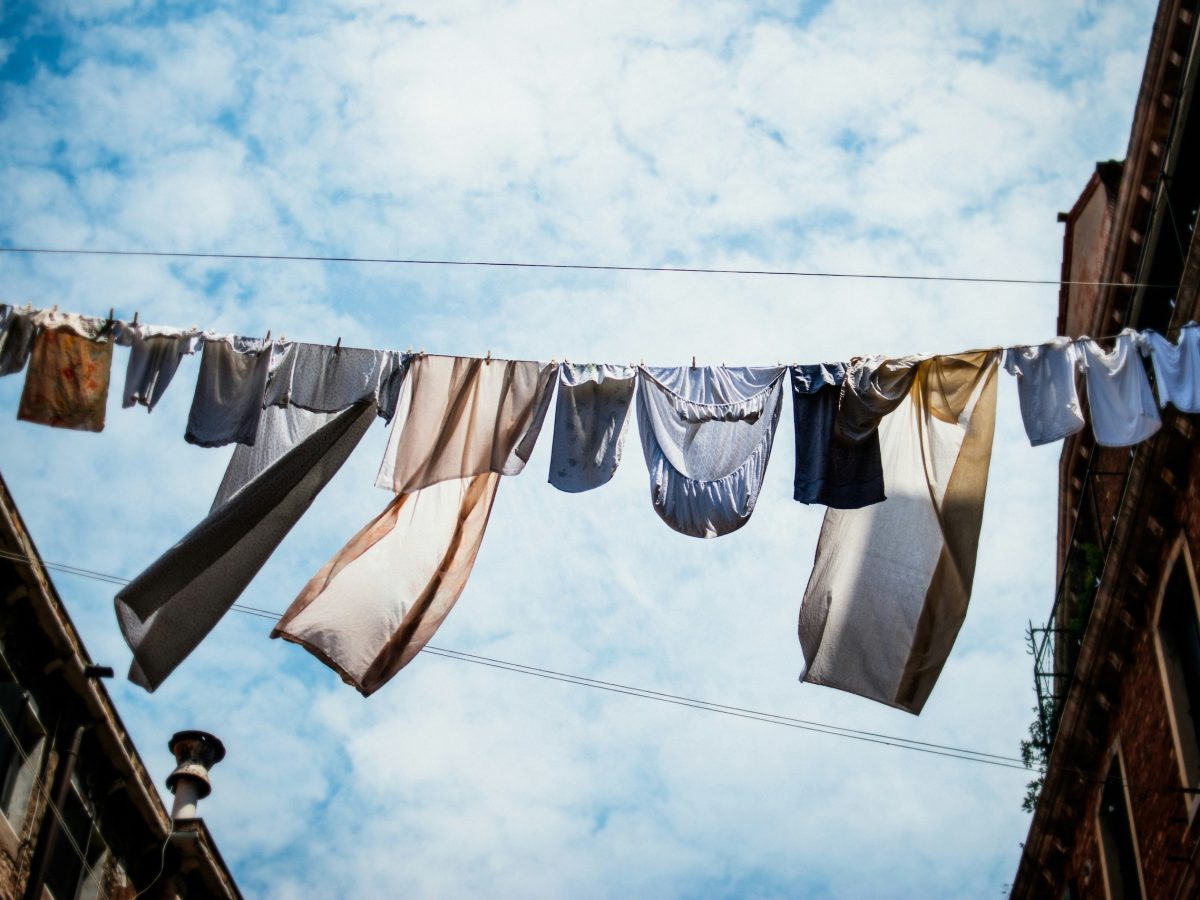
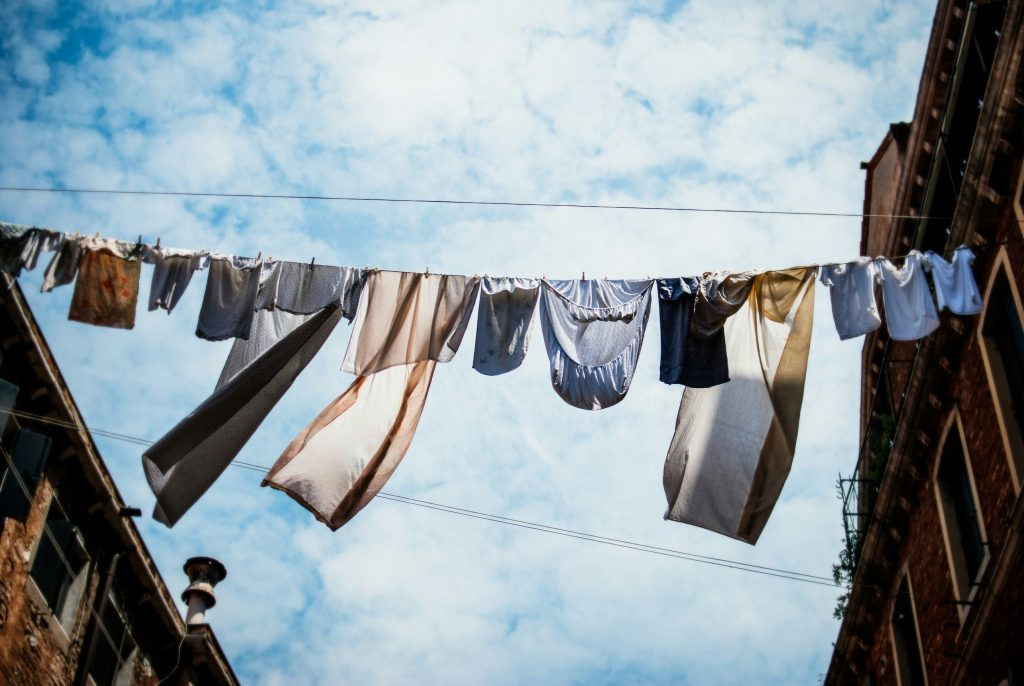
These stains aren’t going to come out with a quick soaking.
But by being disappointed in my progress, aren’t I falling into the perfectionism trap once more? This problem isn’t mine to solve alone. My mother was less of a perfectionist than her mother. My father had better self-esteem than his father. I’m a step further on than they were already and I can work to do more. Then my girls will get their own turn to discover how they want to use the family inheritance – or not.
Perhaps it’s enough if each generation does the best they can, for their own sake and for that of the generations to come.