How do we save ourselves from the zombie Nazis?
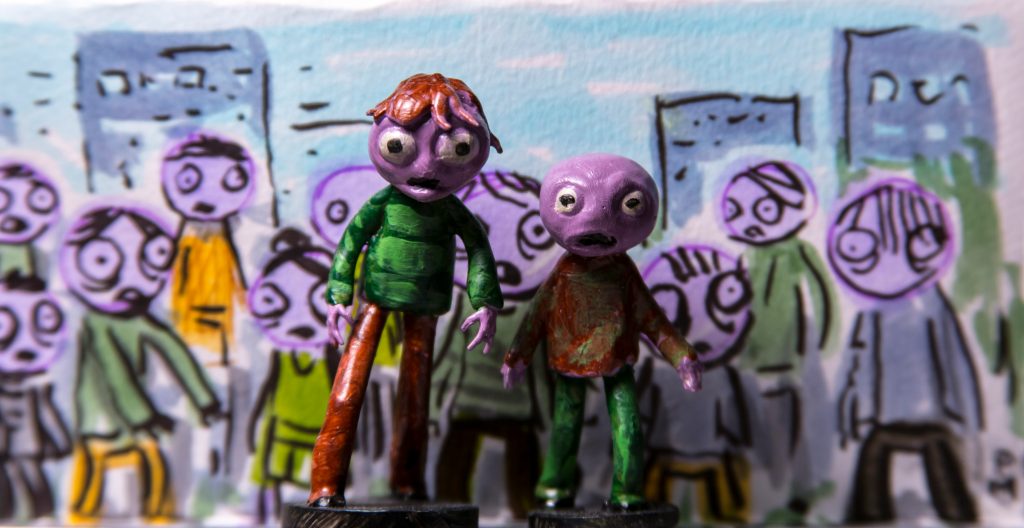
My husband and I have a soft spot for black comedies. So ‘Dead Snow’, in which zombie Nazis wreak havoc on an unsuspecting bunch of friends up in the Norwegian mountains for a fun skiing weekend, was right up our street. The story was that during the Second World War, after years of mistreatment at the hands of the Nazi occupiers, the local people rose up and drove them out into the mountains. Presumed to have frozen to death, in the present day they come back to life as zombies. Once the reality of the bizarre situation dawns on the friends (spoiler alert!), their attempts to escape their fate all come to nothing. The zombies cannot be reasoned with, they are hard to destroy and – when destroyed – more come to take their place. Even the last-minute discovery of why they have risen is not enough to save the final protagonist. The friends are helpless against the horde.
Despite thoroughly enjoying such films, my tastes sometimes come back to haunt me. Quite literally, as zombie apocalypses pop up in my nightmares with worrying regularity. Even so, when I wake up I can comfort myself with the certainty that such things don’t happen in real life.
But recent world events arouse the same emotions in me as a zombie attack. Stomach-churning fear. Utter disbelief that this is actually real. Realisation that the authorities are not going to protect us. Complete helplessness against an unstoppable tide that cannot be reasoned with or fought. Even the sense of an ancient evil reviving, after it was thought to be long gone.
I knew, of course, that sexism, racism, violence, intolerance and irrationality were still with us. I had believed, though, that they were on the wane. That equality, reason, respect, compassion and justice were steadily winning ground.
Now, in 2026, the religious right has gained power in America with its strange version of Christianity that promotes hate and war instead of the love and peace I was always taught were core to Christianity. While the effects of climate change ravage our planet, instead of pledging more resources to combat it the US government is scrapping research and scaring scientists into even avoiding the term ‘climate change’. Gender, race and even Plato have similarly become subjects to be avoided. Books about race or LGBTQ issues are banned and librarians persecuted. Unarmed protesters are shot and then smeared as ‘domestic terrorists’.

The Voting Rights Act that protects voters against racial discrimination has been eviscerated. It has become perfectly acceptable to suggest that women should not have the vote or fill high-profile roles in the military – in fact, women and Black generals are being ousted. Abortion rights have been repealed so women run the risk of prosecution if they end an unwanted pregnancy or even tragically miscarry a wanted pregnancy. Women promote the joys of submissiveness to other women.
Public health care funding has been slashed in favour of ‘spiritual warfare’ and the US doesn’t have the facilities to cope with the current Hanta outbreak. Science and even facts are vilified – those in power see their own will as reason enough. The president has started a poorly motivated war against Iran, part of ‘Gods divine plan’, that has repercussions for us all.
It seems as though American civilisation has slammed on the brakes and gone into sharp reverse.
It’s easy to think of this as a malaise unique to the US. To praise the foresight of Margaret Atwood in predicting their plummet into darkness in her novel ‘The Handmaid’s Tale’, while smugly opining that the same thing could never happen to us.

Yet the warning signs abound. The far right is also on the rise in Europe. In the UK, where I come from, the most recent evidence is the success of the right wing Reform UK party in the local elections. Arson attacks occur on Jewish communities while, at the same time, pro-Palestinian protest is silenced. Non-white restaurant workers are targeted in immigration raids. Where I now live in the Netherlands, a country that prides itself on tolerance, the right wing Party for Freedom was the joint winner of last year’s elections, hate speech on social media is growing and there was an outcry after a police officer attacked two Muslim women. Even in our small town people seem to react more aggressively to minor provocations. In a confrontation with one such man he snapped at me that I should learn Dutch. ‘I speak Dutch’, I responded (speaking in Dutch, as I have done for almost twenty years). ‘No you don’t’, he snarled, demonstrating how a prejudiced person is supremely blind to anything that contradicts their prejudice.
A global survey showed that almost a third of Gen Z men thought a wife should obey her husband, while more than half thought promoting women’s equality had gone too far and 24% agreed that a woman should not appear too independent or self-sufficient.
It seems to me that we are travelling down the same road as America, just a few bends behind. Equality, reason, respect, compassion and justice – the steps we had taken towards these ideals are perilously fragile and easily reversed. The zombie tide of prejudice and violence is rising – and I feel completely helpless against it
But surely we would never let things get as far as in the US? Surely, if the unthinkable happened, if we actually had a government that instigated book-burnings, encouraged racial discrimination and promoted submissive roles for women, then we would all resist?
The director of my research institute, in his New Year’s address, gave us a valuable wake-up call. What would we do, he asked, if like university lecturers in the US we were given the choice between cutting a single lecture from a course because of its ‘controversial’ content, or refusing to do so and hence losing the career we loved? Probably we would think: ‘It’s only one lecture. At least this way, we can still carry on teaching and looking after our students’. And so, step by seemingly tiny step, we would be forced along a dark downwards spiral.
From the German occupation in World War Two, the Netherlands has bitter experience of the impossible dilemma between standing up for others and protecting yourself and those you love. Until I had children, I naively believed that if I had lived back then I would have been a daring member of the resistance, refusing to bend one inch to the vile schemes of the Nazis and working tirelessly to bring them down. After the birth of my first child, I knew I would do anything – sacrifice any principle – to keep her safe. It is incredibly hard for people to defend others against hostile authorities when on the one hand it is uncertain how effective their help will be, while on the other hand the potential cost is the destruction of all they love. That’s why resistance under such circumstances is justifiably regarded as heroic.
As my director went on to point out, the time to act is therefore before things get that far. When the chances of successful resistance are so much greater and the risk of resisting so much smaller. But what can I do?

I’m not at all well equipped to influence events. As a UK national, I can’t even vote in the Netherlands – but then again, voting didn’t save Germany back then or America now. The people in my circle tend to share my opinions, so I’m preaching to the converted there, and I’m far too shy and awkward to engage strangers in small talk, let alone political debate. Those few people I know who do vote for far-right parties don’t do so out of intolerance, but out of legitimate concerns about housing, jobs and education. I can’t disagree with them on those points, and there is unfortunately a dearth of political parties who promote these concerns without polluting them with ugly, twisted ideas about immigration. Ideally, someone would solve the underlying inequality that boosts the far-right. But that someone isn’t me. That sort of change is something that an ordinary ‘Joe Public’ can only achieve in, ironically enough, Hollywood blockbusters. I can join protests, of course. But, positive as it is to see that people still believe in tolerance and equality, I have the sneaking suspicion that such manifestations do little to change the minds of people who think differently.
The people who, unlike me, have the opportunity and the skills to change minds appear to spend their time bolstering ‘their own side’ rather than trying to understand ‘the other side’ and persuade them. The media, social and conventional, seem to me to prefer demonising or caricaturing other opinions to delving into what lies behind them. If each side shuts out the other, then all we can hope for is that ‘our side’ keeps coming out on top, for otherwise we are lost.
But is it even possible to change the minds of ‘the other side’? People are psychologically programmed to prefer information that confirms our own point of view, especially for emotionally charged issues. Recently, it seems to me that we are being conditioned not only to prefer our own world view but to reject anything that doesn’t fit with it as lies or manipulation, conveniently avoiding having to even think about what other people are saying. Being open to the possibility that someone else may have a valid point seems, sadly, to be a thing of the past. A degree of success in encouraging people to reflect on their views is apparently possible by ‘deep listening’ approaches that pay attention to voters’ concerns. Perhaps listening might already have a positive effect, without even needing to change people’s minds. Understanding people’s motivations can at least encourage us to reject an opinion while accepting and respecting the person who holds it, avoiding polarisation.
It’s a different story with the fanatics who are not only suspicious of anything different but actively out to destroy it. I’ll freely admit to being unable to relate to such people. Fanatics can’t be debated with or reasoned with. Which makes it all the more terrifying when fanatics gain power. Then rights, laws, evidence and explanation cease to offer us any protection.
The solution in zombie films is, of course, to grab the nearest weapon and start hacking. In the real world it can also seem acceptable to resort to violence. It’s the ultimate time-travel fantasy, to go back in time and assassinate Hitler, thus averting the tragedy of World War II. Examples from real life, however, make me extremely wary of this route. Despite a lifetime loathing for the Conservative Party and for the ideals of Thatcher, I feel deep sympathy for the victims of the 1984 Brighton Bombing and horror at the people willing to cause such devastation in a futile attempt to remove Thatcher from power. Just two years later, in the Netherlands, after a political ‘cordon sanitaire’ failed to reduce the popularity of the right wing Centre Party, a violent attack on a hotel where the party was meeting did seem successful in halting the growth of racist ideology, as the party failed to reorganise in time to gain seats in the next election, and subsequently went bankrupt. In a documentary about the attack, one of the leftwing activists responsible stated that the destruction of the hotel and the injuries to the party members trapped in the blaze, including one woman whose leg had to be amputated, were well worth it. Fast forward to 2025 and the right wing Party for Freedom party, inheritor of the ideology of the Centre Party, was the joint winner of the Dutch elections. Violence doesn’t seem to be the answer either, and its use degrades the very values we want to protect.
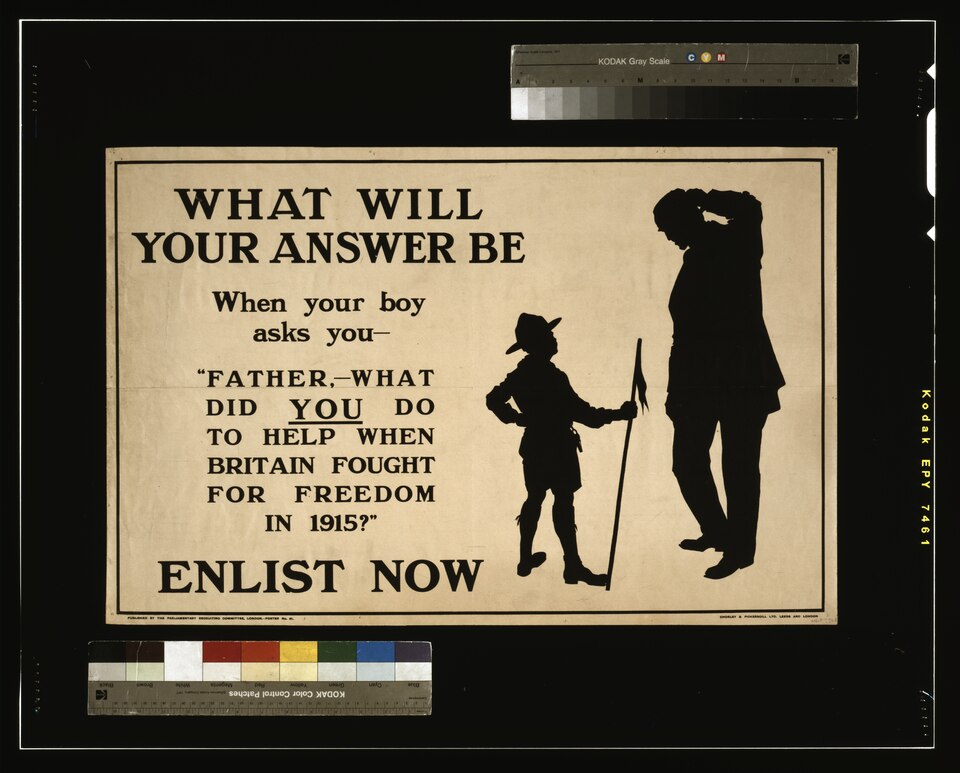
Imagine a future where my children or grandchildren are forced to live in segregated racial zones, adopt traditional gender roles and bow to an ideology of hate. Where the truth cannot ever set them free because the truth morphs continually according to whatever best serves the interests of those in power. What will I say to them when they ask me why I didn’t stop this happening? My honest answer will be ‘Because I had no idea how’. It fills me with shame and frustration, but I have as little understanding of how to halt this rush back to the Dark Ages as of how to defeat a zombie Nazi. At least a zombie apocalypse is fiction, whereas America has shown us that this gathering apocalypse is both terrifying real and far too close for comfort. Can someone please tell me how we can stop it in its tracks?